Author: Greater NW Communications

A Christmas Message from Bishop Stanovsky – 2019

Please enjoy this Christmas message for United Methodists across the Greater Northwest Episcopal Area from Bishop Elaine JW Stanovsky. She invites us to step outside to see what God is up to beneath the surface.

TRANSCRIPT

When I was a little girl and it was just about Christmastime, we’d go out as a family in the station wagon and we’d get a Christmas tree at a lot. We’d bring it home and we’d get out the boxes of decorations to hang on the tree, and when we came to the tinsel, the shiny tinsel; in my family we called it rain.

Now, my friends when I grew up made fun of me for that. They thought hanging rain on a tree was a pretty dismal thing to do. But as a child, it was the rain that reflected the light and that reflected symbolically the love of God in our lives, and so that taught me that at Christmas time it isn’t so much about what’s really going on on the surface of things. It’s really about what’s going on in here that matters.

That amazing couple, Joseph and Mary, traveled to a distant town. It’d be like my family going to the mountains of western Virginia where my family first migrated to this nation.
They were in a place they didn’t know.
They were not among family.
They were about to have a baby out of wedlock.
They were homeless.
They were displaced.
They were alone.

And it was there that they experienced this amazing miracle as this tiny baby was born to them. God’s miracle that life can come with joy, and anticipation, and incredible blessing even in the worst of circumstances. And so, we all these years later, we celebrate what happened that night and we do it by lighting lights and listening to music, making music, singing music. We do it by eating great food and inviting people over to our homes and saying, “Oh, let’s get together and celebrate this amazing thing that happened to Joseph and Mary when the tiny baby Jesus was born.”

You know you can get lost in all of that. You can make it about the food and the song and the lights.

I invite you this Christmas to step outside.
Step outside of your home.
Step outside of your preparation.
Step outside of your expectations, your anxiety.
Step outside of your sorrow to see what God’s up to this year this Christmas. What’s being born?

Step outside to see the goodness, the kindness, how merciful God is, and take a deep breath.

The heavens will dance. Peace will settle gently. Hope will shine again and anew for us. God is faithful. God is steadfast.

May it be to us according to God’s promises for this day, for our lives, for our church, for our nation, for the whole beautiful world. A blessing to you. Amen.


Video by Rev. David Valera, Exec. Dir. of Connectional Ministries (PNW)
Conferences of the Greater Northwest Area commit to 100% payment of General Church apportionments in 2019

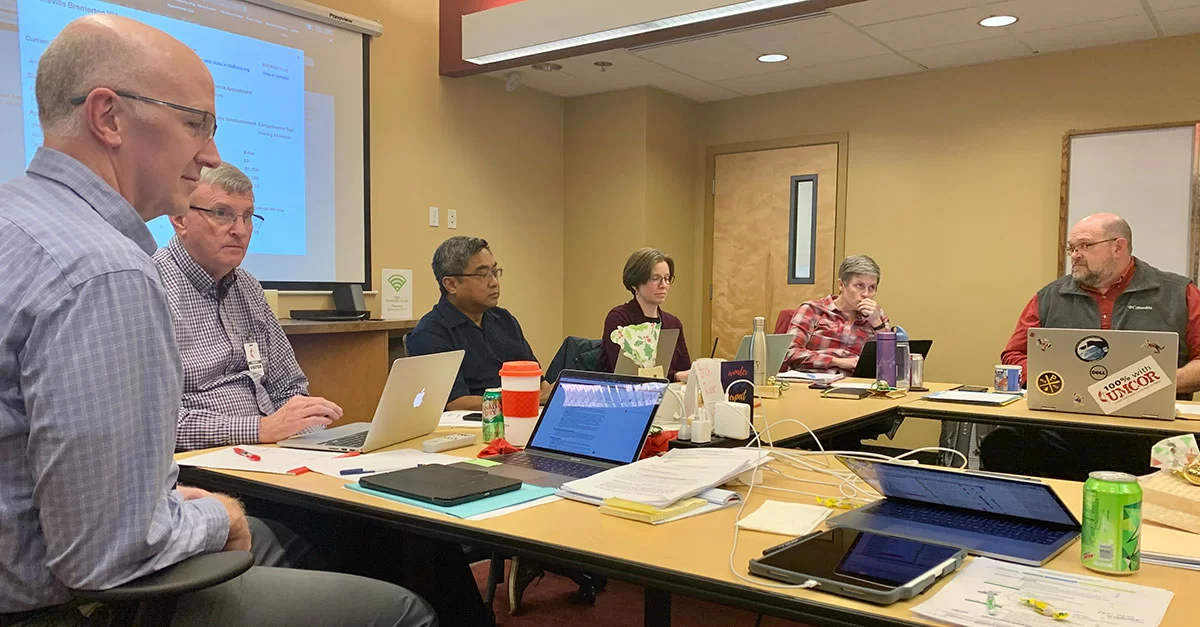
The Greater Northwest Area's three conferences have each committed to paying 100% of their General Church apportionments for 2019. The news was delivered as the area's Cabinet met in Des Moines, Wash., last week.

Continue reading

The Close of a Year of Collapse and CrossOver

CrossOver reflection for Week 52 • Beginning December 1, 2019
We Make the Road by Walking, Chapter 13 

Bishop Elaine JW Stanovsky

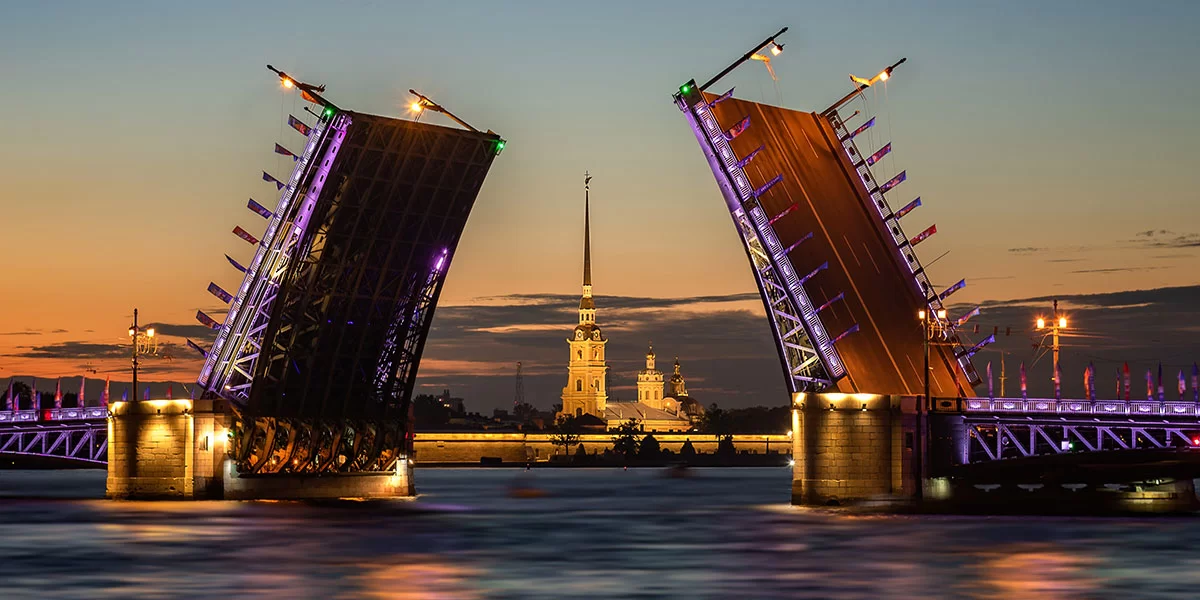
Long ago and far away, my walk with Jesus took me to Russia, just as the Soviet Union broke up in the early 1990s. Russia was crossing over in 1992 from the secularism, suppression and social control of the Soviet Union. Churches, whose property had been seized and had operated largely underground for 75 years – Orthodox, Catholic, Baptist, Lutheran, Methodist – were all emerging, from the long winter of repression and confinement.    

  • Imagine crossing through security at a prison furniture factory in St. Petersburg, Russia. Your guide is a Russian Orthodox priest, in long black robes, newly recognized as chaplain to the prison. He has convinced prison administrators to allow Christian prisoners to produce small icons of the faith instead of furniture to sell to fund the prison. In a small upper room, it is like a tiny workshop of believers. Those believer prisoners lead you to a far corner of the prison to show you the chapel with a shiny copper onion dome they are building in their free time.  
  • Sit with the Admiral of the Russian Fleet, in the ornate Russian Admiralty, as a U.S. Navy Chaplain tells how he gives spiritual care to sailors and they discuss what military chaplaincy might look like in a post-Soviet Russia.
  • Now walk to a sagging two-story brick building, held upright only with the help of salvaged railroad rails driven crudely through exterior walls to provide cross bracing. Older women love and tend shunned teenaged girls, who are learning to love and tend their babies. They sew dolls that they sell to support their children in an honorable way.  
  • Visit the women’s ward of a stone-cold, drafty 150-year old prison hospital, where a post-operative woman climbs a rattly ladder unaided to her upper bunk every time she has her bandages changed or uses the bathroom.  
  • Notice as one of your traveling companions, a substance abuse counselor, sneaks away from our church hosts to meet surreptitiously with underground advocates for treatment of alcohol and drug dependency in a country that brands alcoholics criminal.

It took the collapse of the Soviet Union for churches in Russia to have the freedom to step outside the tight restrictions on freedom of religion to re-engage in the fabric of community life and to bring the life-giving good news of Jesus Christ to people and a nation who had sat so long in darkness. In 1992 the Christian faith felt fresh and robust, shiny and new. Everything seemed possible. It was a CrossOver season, with plenty of uncertainty, but an irresistible tug toward living faith with every breath, every word, every human encounter.

From Russia with Love

Could we learn from the Churches in Russia? What if The United Methodist Church woke up to discover that our buildings were gone, our websites and Facebook pages shut down, and bank accounts were closed? What would be left of the Church? What difference would it make to the woman in her bunk? A hopeless sailor in the Navy? An alcoholic trapped in his addiction? What would the church be, without all of its institutional forms, habits, schedules?

What if we viewed this season of breakdown or break-up in The United Methodist Church as offering a rare opportunity to think anew and afresh about what the church is for, and how it can best share the blessings of God with the world?  

Crossing Over as a Way of Life

Thank you, for reading, praying, discussing, pondering, imagining new ways to be lovers of God, neighbor, and self.

A year ago I invited you to join me on a year-long CrossOver journey to become “Alive in the adventure of Jesus.” In small groups or alone, for the whole year, or just for a season, many of you read wondered with Brian McLaren in his book, We Make the Road by Walking. A remarkable number of you wrote brilliant, touching, wise blog posts for each chapter of the book. We asked ourselves, how do we understand the Bible? What was Jesus up to? What does it mean for the Church to be Christ’s living presence on earth? How must I live to serve?

Here we are a year later – at the end of our book – realizing that we have not reached the other side. Yet, we are not stalled. We are making the road by walking and we are stronger and bolder as we continue the adventure of Jesus. What I know more clearly now than I did a year ago is that most United Methodists in the Greater Northwest are firmly committed to the full inclusion of LGBTQ+ people in the life of the Church, but that a significant minority understands the Bible to prohibit full inclusion. 

So, what’s next? Though we may not all think alike, may we not love alike?  

I don’t know today if The United Methodist Church will stay together as a world-wide connection, if it will split into two or three separate incompatible entities, or if some “amicable separation” will be negotiated between parties that do not choose to live together anymore. What I think I do know is that God is using this time of uncertainty to invite us to deeper connections with each other. And that deepening our connections with each other will make it easier to walk the way that will unfold before us without hurting each other. 

I am working with a team of leaders from across the Greater Northwest to offer a season of deeper, broader, authentic relationships across the divisions among us from January through May of 2020. John Wesley saw the church as a great life-giving connectionFor Wesley, connection was personal, relational. I’m calling for growing a new, personal, gracious Grassroots Connections among church participants, between our churches, and between people inside and outside our churches. This is where Jesus shows up — when we are in relationship. Watch for more.

With a thankful heart,

Bishop Elaine JW Stanovsky | Greater NW Area

Words Make Worlds

CrossOver reflection for Week 51 • Beginning November 24, 2019
We Make the Road by Walking, Chapter 12 

Rev. Katie Ladd

Words make worlds. They are the DNA of meaning. Did someone you deeply admired ever highly praise you? How did you feel? Were you ever called a — as a child or as an adult — that left you feeling ashamed or like you were nothing? Words make worlds. Words make worlds beautiful, and they make them unbearable. It is genius that our origin story begins with God speaking creation into being. It is no coincidence in John’s Gospel that we have a new creation story that says, “In the beginning was the Word….” Words make worlds. String words together into stories and that is where we find deep and transformational meaning.

Sadly, too many Christians spend too much time worrying about the facts in the Bible. While there are most certainly facts in the Bible, they aren’t the purpose of the Bible. This is an important distinction. The Bible is a story about meaning that creates meaning; it is an inquiry into why; it is not primarily a report of what. Again, in Genesis, Christians often focus on the fall, and we argue about the creation story. When we do, we miss a key component — the why. Why did God create? The story tells us, but we miss it. God creates us for communion — to reside in God’s good garden in peace and covenant community together and with the Divine. Sabbath is the purpose of creation. In our squabbles about the what and the how we miss the meaning in the words.

The Bible invites us into new worlds created by our spiritual ancestors that tell us about God’s faithful acts to and for creation. It invites us to explore hard things like war, power, greed, loss, and tragedy. It also offers us glimpses of what God’s good world might include. It is a love letter to God and from God being worked out in the mess of human frailty.

Chapter 12 of Brian McLaren’s “We Make the World by Walking” is called “Stories that Shape Us.” In it, he says, “…it’s easy to miss the point of ancient stories. Those stories didn’t merely aim, like a modern textbook, to pass on factual information. They sought people’s formation by engaging their interpretive imagination” (52).

As a pastor, I’ve heard many people struggle with their faith because they simply can’t believe (that is, think something is correct) what they’ve read in the Bible. They can’t agree with it. This, people think, means they must walk away from Christianity. However, agreement isn’t the goal of sacred story. The truth of a story is not found in its accuracy to facts. I encourage people struggling with faith to change their definition of belief to trust. Trust in the stories to lead us to someplace new. Trust the stories to transform our hearts and our lives. Trust in the wisdom of the ancients. It will create new worlds.

There is much to know about the Bible, its timeline, archaeology, and history. Such things should not be discounted, but none of those are the locus of salvation and transformation. Jesus did not call us to think better; he invited us to follow him. His primary commandment was to love, and love is all about encounter and meaning and purpose and communion. When I say that my dad was the best dad in the history of all dads, no one wants to fight me for being factually inaccurate. It is a statement of love, and everyone seems to understand that. It is 100% true even if it is not factual (but, let’s face it, it is factual). 

I invite you to let the Bible form rather than inform. Let the words build worlds of meaning inside of you. There is an infinite and sacred trove of wisdom in the Bible, but it is not an easy book. The words do not always settle easily in 21st-century minds. Wrestle with them and let them wrestle with you, as Jacob and the night stranger wrestled together so many years ago. Like him, come away changed, perhaps even limping from the struggle. Like Jacob, be transformed by encounters with the Divine.


Rev. Katie Ladd is the pastor of Queen Anne United Methodist Church in Seattle, Washington. She is also the founder and director of The Well.

Rivalry or Reconciliation

CrossOver reflection for Week 47 • Beginning October 27, 2019
We Make the Road by Walking, Chapter 8

Nancy Tam Davis


Chapter 8 of Brian McLaren’s book We Make the Road by Walking addresses the choice of rivalry or reconciliation. When faced with a loss, or even the fear of loss, we make a choice. Sometimes that choice is conscious; often, it is not. The loss can be something I would consider trivial, like losing a game of checkers. Other losses can be life-threatening. What is a substantial loss for me may be insignificant to you. The issue is that we reach a point of choice, a decision to enter into rivalry, or we find a way to reconcile the loss.

I am reminded of a visit to an aquarium many years ago. I was wandering through a cool, dark, cave-like hallway displaying various sea creatures in dimly lit, glass windows. In one such tank lived the longfish. This tiny fish was about 2 inches long and ¼ of an inch at its widest point. Each fish lived in one of the many parallel trenches on the bottom. It looked as if a careful gardener had passed a fine rake across the bottom of the tank. Only one fish occupied each trench. Each one waited patiently until a tiny pebble rolled down the side of a trench, and the occupying fish would immediately pick the pebble up and spit it into the neighboring trench. The neighbor fish would then gather the stone and spit it back, with what I imagine to be a sense of satisfaction. 

If fish could talk, I believe the dialog would be simple. “Oh no, you don’t, I don’t want your rock.” “Here, take that.” “How do you like them pebbles.” And the game went on all day. Their reason for living seemed simple. Keep your own trench clean, and don’t worry about your neighbors.

I recognize the longfish in me. The impulse I had today when a car passed too close for comfort was to let that driver know they had made a poor choice. I could teach him. Then I could return to my lane (or trench), knowing that I had once again balanced the scales. There have been times when the words of another caused pain, and quickly there arises the impulse to hurt back. That nanosecond of decision-making is almost preconscious and can initiate a chain of rivalry that destroys a relationship. 

Throughout history, rivalries have not ended well. For some, it has caused irreparable divisions in families. In the worst cases, it has sparked never-ending wars until no one remembers or even cares about the igniting issue.

I also remember those times when I did stop and think about the choice ahead of me. I have both received and given the grace that moves into reconciliation. With reconciliation, we can hear one another, understand and learn from one another. The seemingly endless game of rock-spitting can be ended. I believe God calls us to all be people of grace and reconciliation. It is a choice.


Nancy Tam Davis serves as the Conference Lay Leader for the Pacific Northwest Annual Conference of The United Methodist Church.

An​ Rx for Abundant Life

CrossOver reflection for Week 45 • Beginning October 13, 2019
We Make the Road by Walking, Chapter 6

By Emilie Kroen


The Lord is good to all; he has compassion on all he has made.
– Psalm 145:9

“I am blessed to be a blessing.” 

This is my breath prayer from “Plotting Goodness.” As I write this reflection: “I am blessed to be a blessing.”

“I am blessed” – Oh how blessed! 
Even when I feel unworthy, I am blessed. 
Even when I feel inadequate, I am blessed.
Even when my words hurt others, I am blessed. 
Even when I cry out in anguish, I am blessed.
Even when in my selfishness, I fail to help the hurting, I am blessed.
Even when my actions stray from God’s will, I am blessed.
Forever and ever, God’s goodness blesses me and you, and you, and you, and you, and you too.

How does this knowledge of being blessed move from head to heart? To foster a grateful heart, we must take time to acknowledge the goodness in our lives daily. I do it by keeping a gratitude journal. Others use music, meditation, or using a tactile reminder like carrying a rock, coin, cross, or another small object in their pocket.

Did you know*:

As we create gratitude, we generate a positive ripple effect through every area of our lives — our desire for happiness, our pursuit of better relationships, and our ceaseless quest for inner peace, health, wholeness, and contentment. Studies show that gratitude has a positive impact on our physical, psychological, and social lives. 

A grateful heart can provide a stronger immune system and lower our blood pressure. Gratitude can also lead to higher levels of positive emotions such as joy and optimism, help us sleep better, and inspire us to exercise more and take better care of our health. 

Psychologists remind us that what flows through the mind sculpts the brain. If we ask our mind to give thanks, our mind gets better at finding things to be thankful for, and we naturally become more grateful.

Gratitude is a relationship-strengthening emotion that helps us to recognize how we are supported and affirmed by other people. With a grateful heart, we become more helpful, generous, compassionate, and forgiving. 

Gratefulness is the lasting residue that we can weave into our very being. Gratitude enhances our wellbeing and compels us as a grateful person to do good — to be a blessing to others.

While we hopefully don’t make a practice of “plotting evil,” each of us tries to plot our path forward. Even when we have a good idea where we want to go, flexibility, like gratitude, can serve us well. My husband and I took a long road trip last year to visit National Parks across the country. Our plan was detailed and comprehensive, but there were surprises and detours.

Abram and Sara undertook a long journey as well. Unlike my husband and I, they had no map to follow, and no idea where the destination was. But God was faithful, and His focus never wavered. While there were plenty of surprises, when they stepped out in faith, they were met with blessings that continue through the ages to all generations.

The blessings that surround us when we stop to notice them should overwhelm us. As we have eyes to see how abundantly our lives are blessed, we know there is much to share. May we make a conscious effort (maybe even a plot) to show goodness to others, and practice gratitude, ever on life’s journey.

May I be a blessing to others – today I pray
When I trust in God’s goodness, I am a blessing.
When I recognize my worthiness and acknowledge the worthiness of others, I am a blessing. 
When I use my giftedness to do God’s will, I am a blessing
When I choose my thoughts and words to show grace and mercy, I am a blessing
When I am vulnerable and humbly share my story to help another, I am a blessing.
When this hurting world compels me to give generously of my gifts, time, and money in ways that heal, I am a blessing.
When my actions build up God’s kingdom and reflecting his love and solidarity with others and all creation, I am a blessing.
In God’s blessing economy, God’s goodness blesses me and you, and you, and you. And we bless each other and all God’s creation too.

Jesus’ teaches us to live out our faith, trusting in God’s “promise of being blessed to be a blessing.” To me, this is the prescription for Abundant Life.

“I have come that they may have life, and that they may have life more abundantly.”
– Luke 10:10b

*I learned these things from reading Robert Emmon’s “The Little Book of Gratitude” & M. J. Ryan’s book “Attitudes of Gratitude.” 


Emilie Kroen was raised in the Methodist Church. She and her husband Tom are retired and live in Tualatin where they worship and serve at Tualatin United Methodist Church. Their adult son, Matthew, lives nearby. Emilie is Associate Lay Leader for Oregon-Idaho Annual Conference. She also leads the Abundant Health work team and serves on the Ministry Leadership Team. Four years ago, Emilie retired from a career in the credit union industry; the last eight years as a senior financial examiner for the State of Oregon.

Bishop Stanovsky announces Greater Northwest Area guiding coalition

FOR IMMEDIATE RELEASE

In the wake of the exclusionary and punitive actions of General Conference 2019, Bishop Elaine JW Stanovsky is announcing the formation of a Greater Northwest Area Guiding Coalition. The coalition will help to shape and lead a new movement of Methodism in the Northwest that fully includes LGBTQIA+persons in membership, participation and leadership, both lay and ordained.

In conversations with people inside and outside our churches, listening deeply to voices on the margins, the group will develop proposals for United Methodists across the Greater Northwest to move into a future of vital, inclusive, innovative, multiplying, engaged Christian ministry in the Wesleyan Tradition.

Bishop Elaine Stanovsky offering a blessing during worship at the 2019 General Conference.

“We are forming this Guiding Coalition in response to many conversations since last February, and to legislation passed at the annual conference sessions earlier this year,” shared Stanovsky. “It is clear that we need to be both strategic and collaborative in this moment, when the generous practice of United Methodism is under attack. The coming months may require us to move quickly and rely on our collective strength.”

The Guiding Coalition is comprised of representatives from the three conferences that make up the Greater NW Episcopal Area – The Alaska Conference, the Oregon-Idaho Conference, and The Pacific Northwest Conference.

According to Stanovsky, the coalition will embody practices and values that build on strengths already present in the Greater NW Area. Previous discussions in the area have identified the need for deeper Christian discipleship and community engagement, including stronger ministries of solidarity, justice, and mercy.

The Guiding Coalition will invite work groups of laity and clergy to examine areas where the conferences can shape or define a way forward. One group will consider how the area can continue to resist the harmful remnants of the Traditional Plan that were passed by the 2019 General Conference while seeking to reform the Church through legislative action in 2020. Another will look at financial resources, including apportionments, seeking to align them with the values and concerns of United Methodists in the Northwest. And yet another will strive to discern what a new expression of Methodism might look like if designed for 21st century people living in the Greater Northwest Area.

One group will envision what a “grassroots” connection might look like, built on authentic relationships. Vital conversations across difference — between established and emerging leaders, churches of different hearts, minds, and experiences — will be explored. The group will also look forward to the 2020 Shared Greater NW Annual Conference Session in June, with anticipation for the potentially monumental decisions that may need to take place.

Members of the Greater NW Guiding Coalition include: Jim Doepken, Jo Anne Hayden, Kelly Marciales and Carlo Rapanut from the Alaska Conference; Wendy Woodworth, Jan Nelson, Mark Bateman, Ric Shewell, Jeremy Smith, Paul Cosgrove, Karen Hernandez, Allen Buck, Carter Lybeck, Laurie Day, and Donna Pritchard from the Oregon-Idaho Conference; and Skylar Bihl, Brant Henshaw, Joe Kim, Marie Kuch-Stanovsky, David Reinholz, Katy Ritchey, Elizabeth Schindler, Dionica Sy, Kathleen Weber, Karen Yokota Love, David Valera and Kristina Gonzalez from the Pacific Northwest Conference.

Many more people will participate in the workgroups as they form in the weeks ahead.